What Athletes Won't Say Out Loud
A teenager will almost never walk up to their coach and say "I'm not okay." But they might tap a number on a screen.
That's the whole idea behind Nui Sport, a mental wellness app for youth and high school athletics. The founder is a mental health professional who'd spotted a gap nobody was filling: coaches can't get a real read on how their players are doing, and athletes have no easy, low-pressure way to tell them. She had the vision and the clinical expertise. The first build, made by a developer with no designer, wasn't what she'd pictured. I came in to design it properly, both sides of it, athlete and coach.
I led UX and visual design for the entire app in Figma, then handed off to the development team to build.
Designing For the Person Watching
The first real decision wasn't about screens at all. The founder assumed the app was for athletes. But the more we talked, the clearer it got that the people most fired up about it were the adults overseeing them: coaches, parents, athletic trainers, anyone who wanted a simple way to know how their kids were doing. The athlete's job is to share. The coach's job is to notice and respond. Get that loop right and the app earns its place.
Doing One Thing Really Well
The harder job was holding the line on scope. The founder had a big vision and a long wish list, a blog, a spiritual section, a stack of features she wanted in from day one. All good ideas, and exactly the kind of pile-on that sinks a young product before it floats. My push, over and over, was to do one thing excellently and earn the right to add the rest later. So we narrowed to the core: a dead-simple athlete check-in, and a coach's view of it.
The Check-In
To figure out what "dead-simple" actually meant, I downloaded every mental health app I could find, paid and free, and studied them hard. What felt easy, what felt cold and clinical, what was so cumbersome you'd never open it twice. The lesson that shaped everything: for teenagers, friction is fatal. If checking in feels like homework, it doesn't happen.
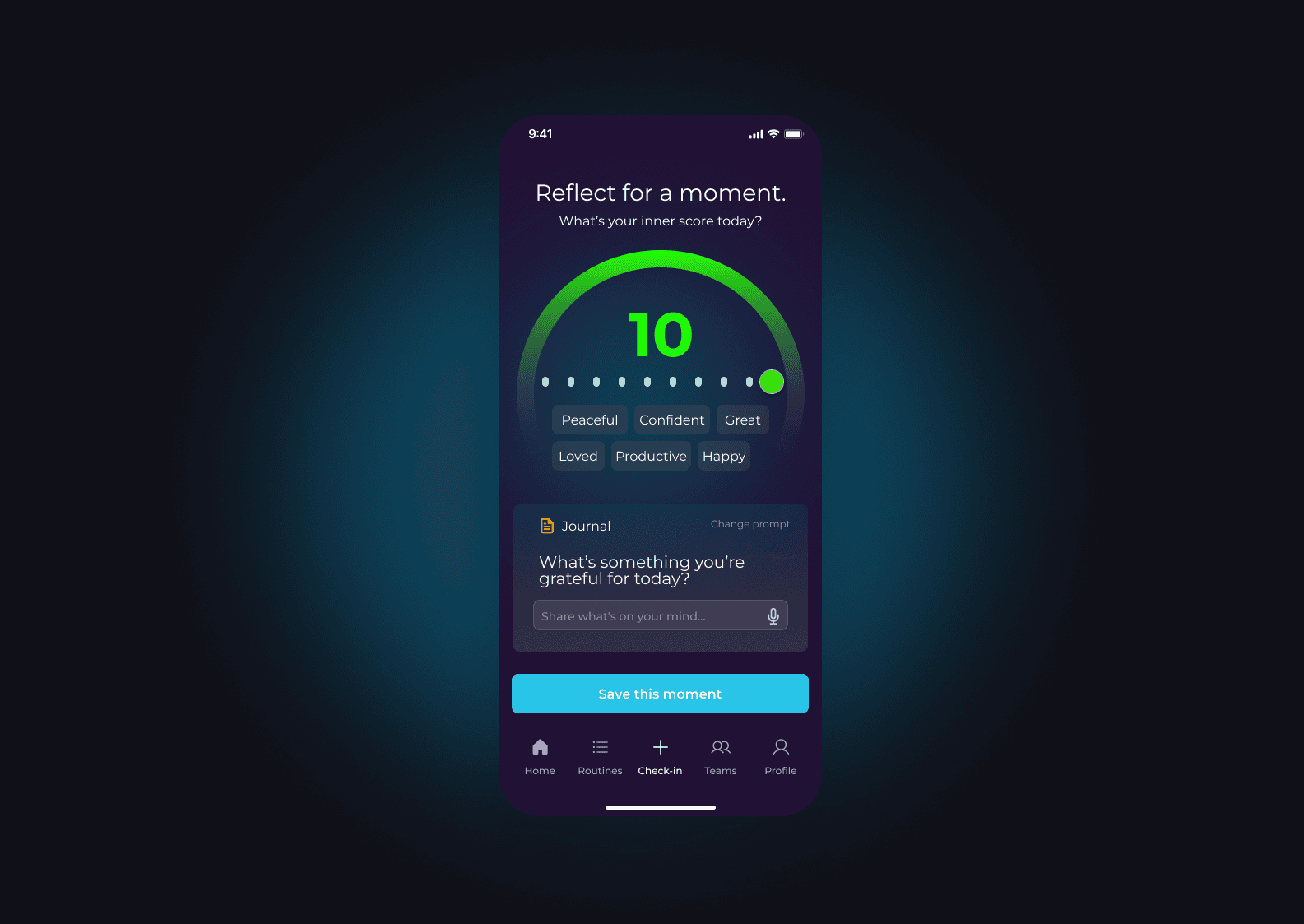
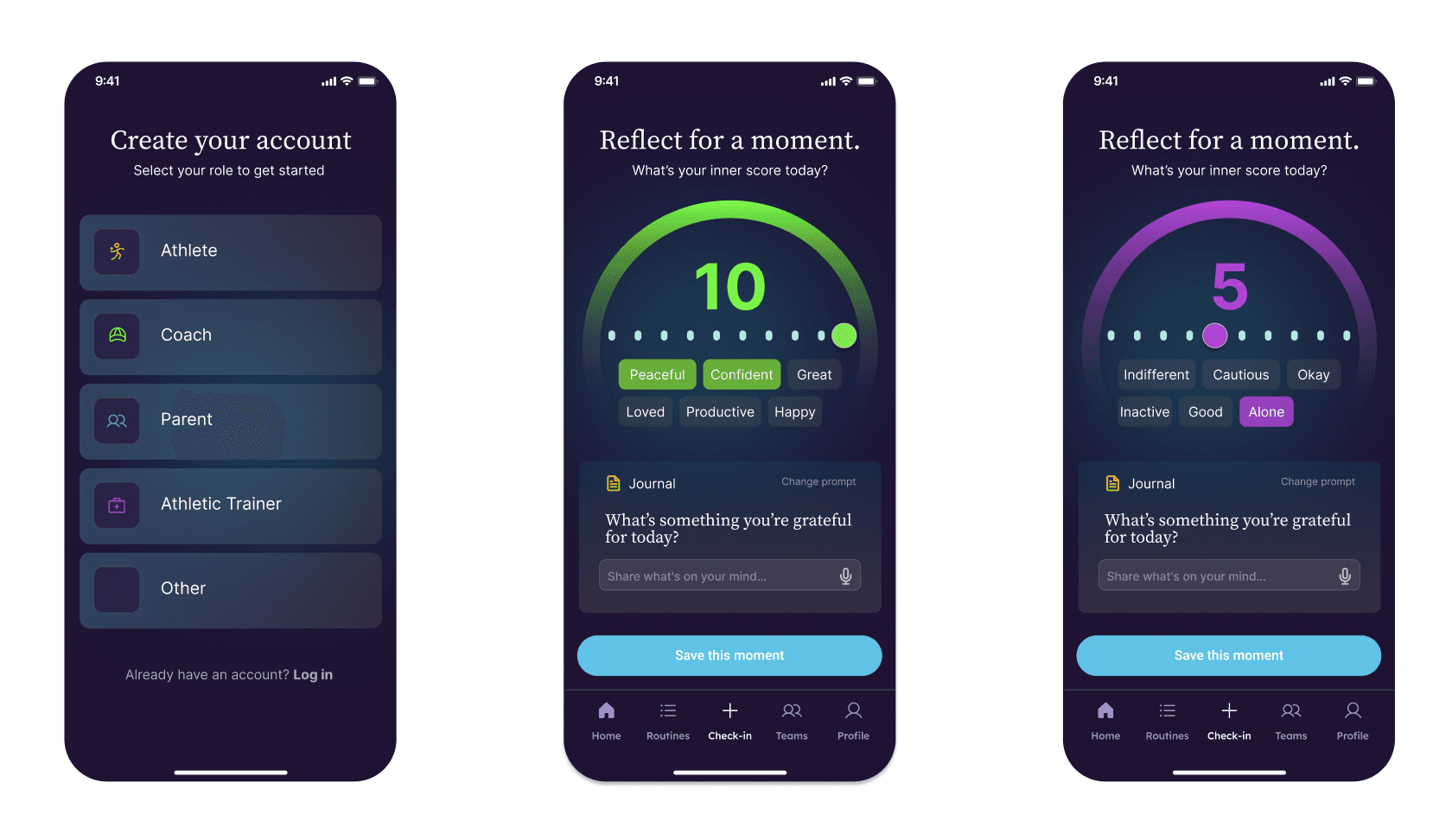
So the check-in opens on one question, answered 1 to 10. As the score climbs, a dial fills and shifts color, and the emotion words beside it shift too, so the screen mirrors how you actually feel instead of just logging a number. A low score and a high score look and read like genuinely different days. One tap and you've said something true. For the kids who want to say more, a journaling layer lets them use their own words and name what made the day rough. Depth for those who want it, a single tap for those who don't.
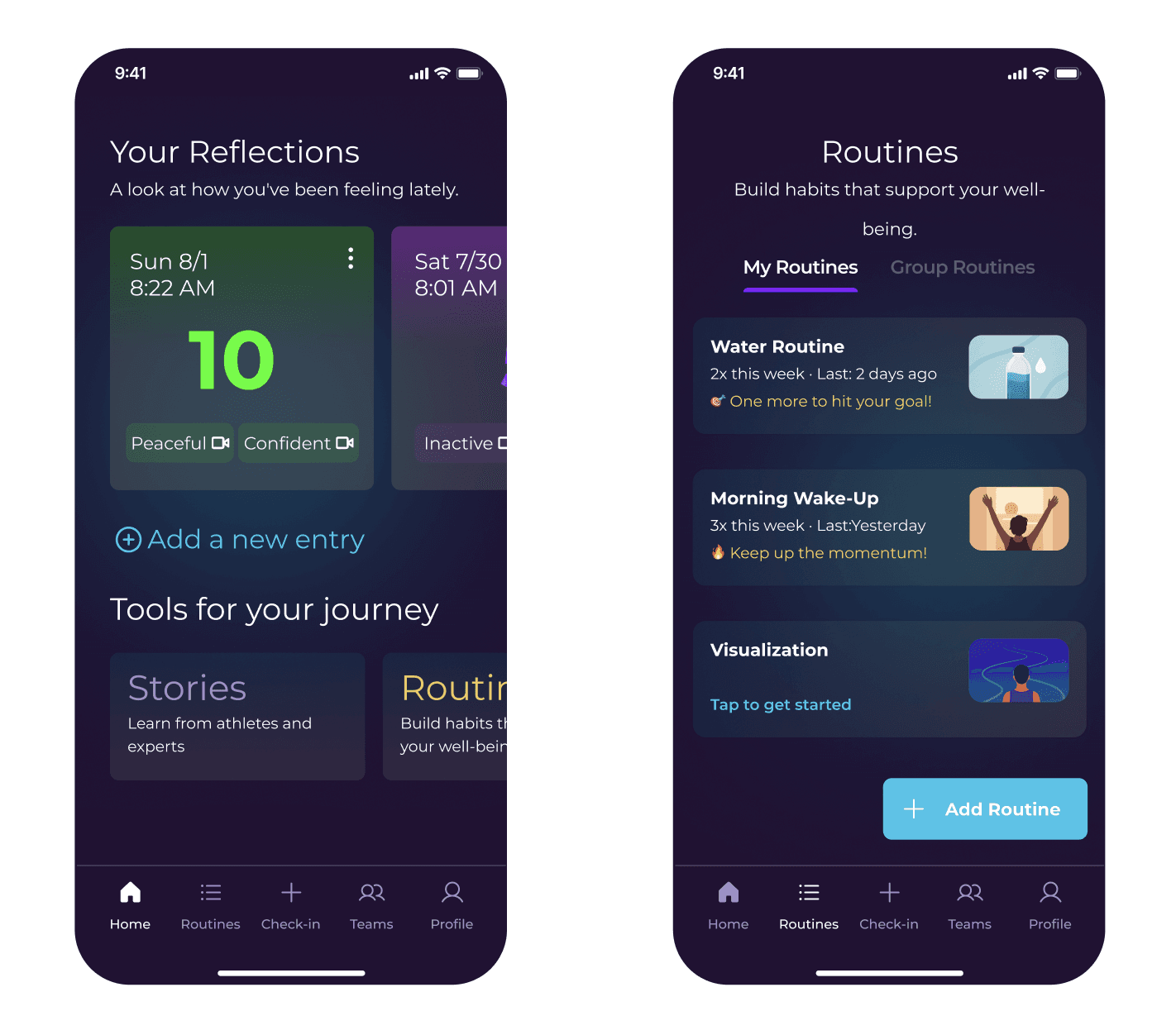
From there the athlete gets a home base to see their mood over time and reach for resources and activities when they need a reset.
The Coach's View
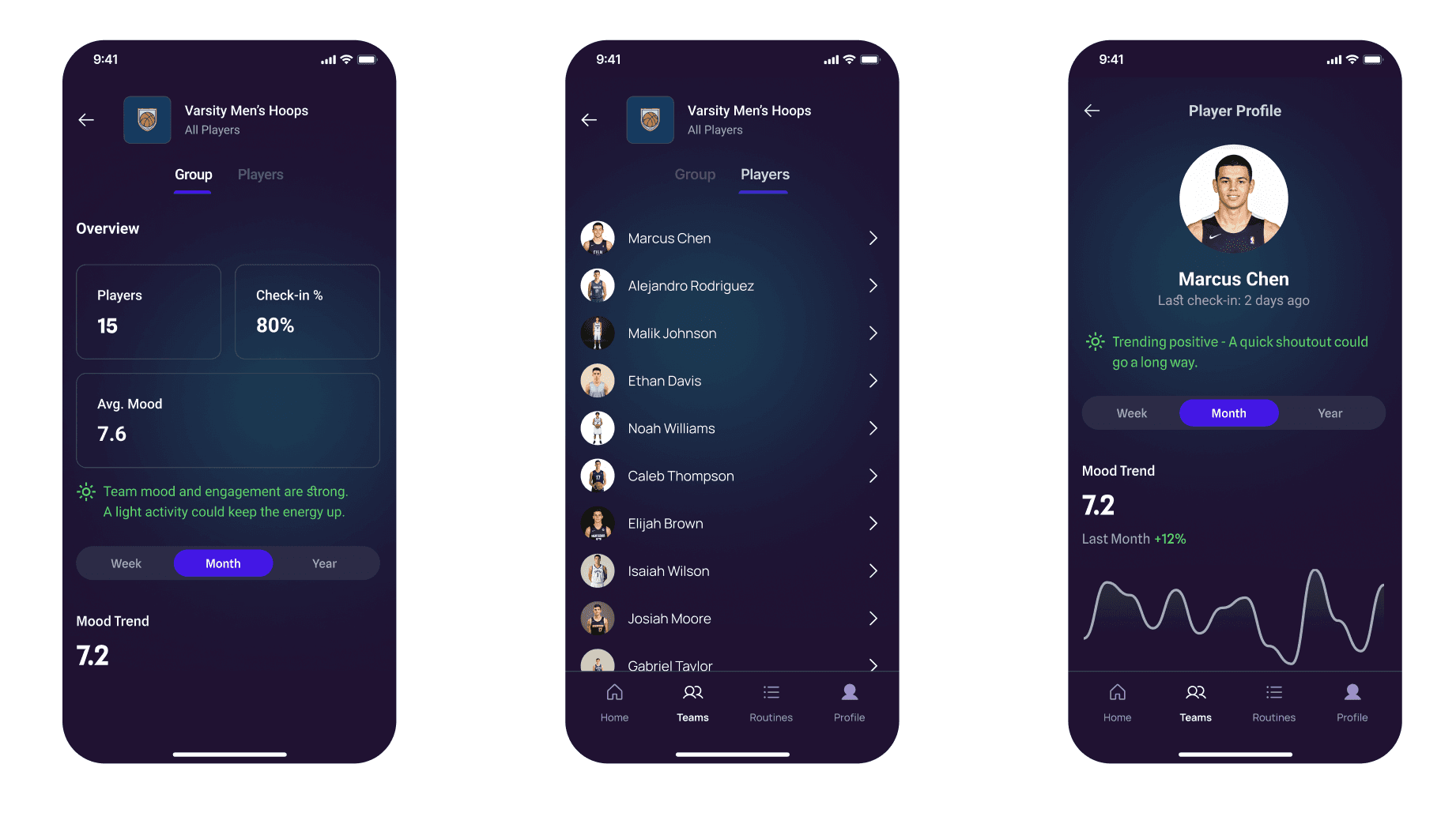
The coach side carries more weight, because the coach is the one acting on what they see. They open to the team's pulse at a glance, average mood, check-in rate, and a plain-language read on how the group is trending, then drill into any individual to see a mood line over weeks and decide whether that athlete needs a quick shoutout or a real sit-down. The design goal was clarity under pressure: a coach should be able to glance between drills and instantly know who's thriving and who might need a quiet word.
The Impact
The founder took these designs straight into pitch meetings with athletic directors and has already signed several contracts on the strength of them. Coaches see the screens and immediately get it, because the need is real and the product finally looks like the answer. The design became the thing that sold the vision. That's an outcome I'm proud of.
What's Next
NUI Sport now in a design-integrity phase, bringing the build in line with the original Figma system so the public launch lives up to the work. Then comes the real test, which is getting it into athletes' hands and learning how they actually use it.