Enter password to view case study
Making Complex Content Easier to Find, Manage, and Trust.
11,000 documents and nowhere to look
Healthcare communications are complicated.
Every document, policy, enrollment packet, and marketing asset has a purpose. The challenge begins when thousands of those assets need to work together.
One of the country's largest health insurers relied on Symphio to manage that complexity, but as the platform grew, so did the effort required to navigate it. Finding content was harder than it needed to be. Understanding how content connected across the system was even harder.
What started as a content library had become an information ecosystem.
Seeing the Problem Differently
I initially focused on navigation.
But after conversations with our customers, it became clear that navigation wasn't the real issue.
Nobody described their work in terms of files, folders, or storage structures. They talked about relationships.
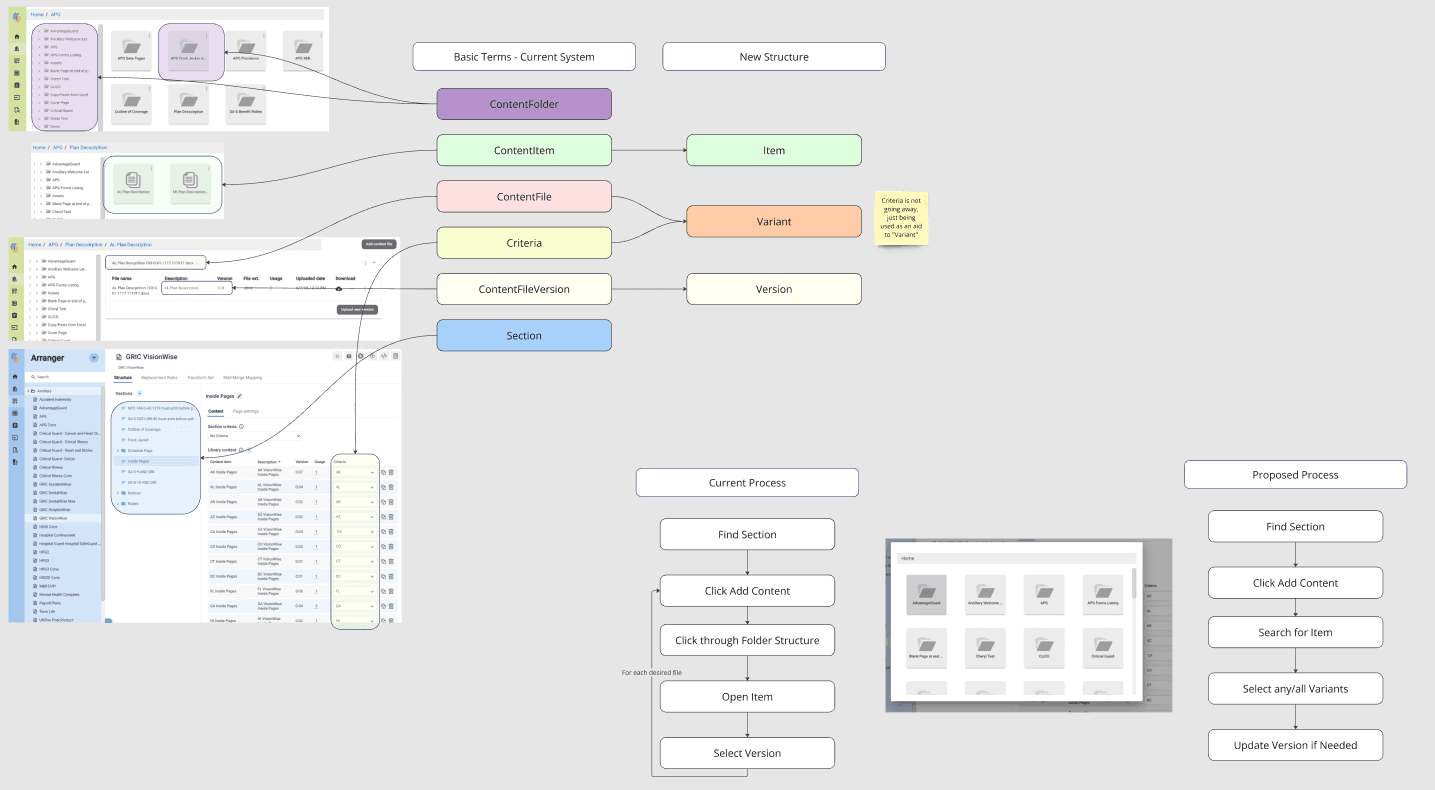
Diagramming a new workflow:
A policy belonged to a family of policies.
A document existed in multiple variations.
Updates carried through multiple versions over time.
Our customers weren't only managing files, they were managing connections.
Building a Better Way to Organize Content
Once it was clear how the customer thought about their work, I needed to create a structure that reflected it.
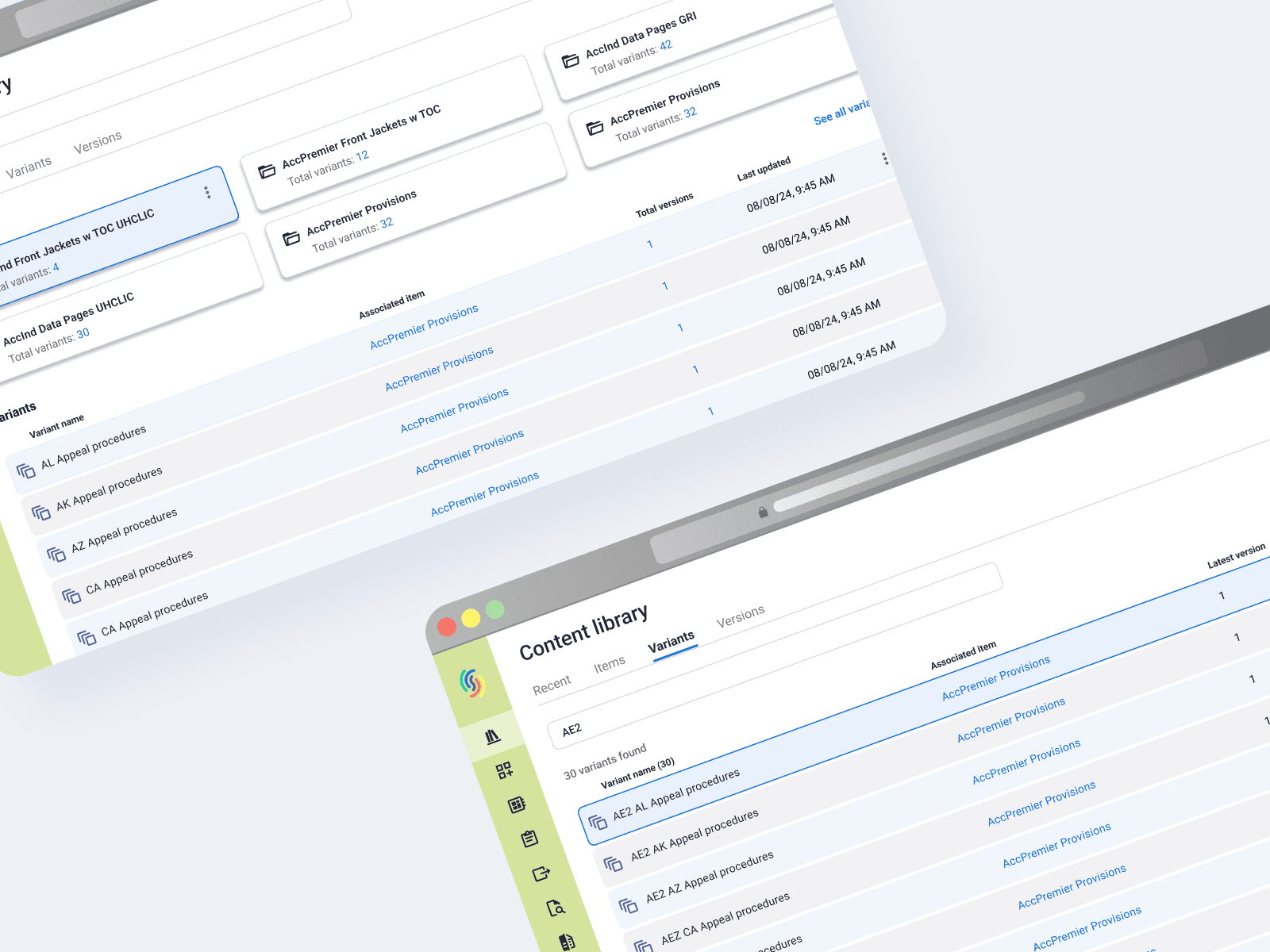
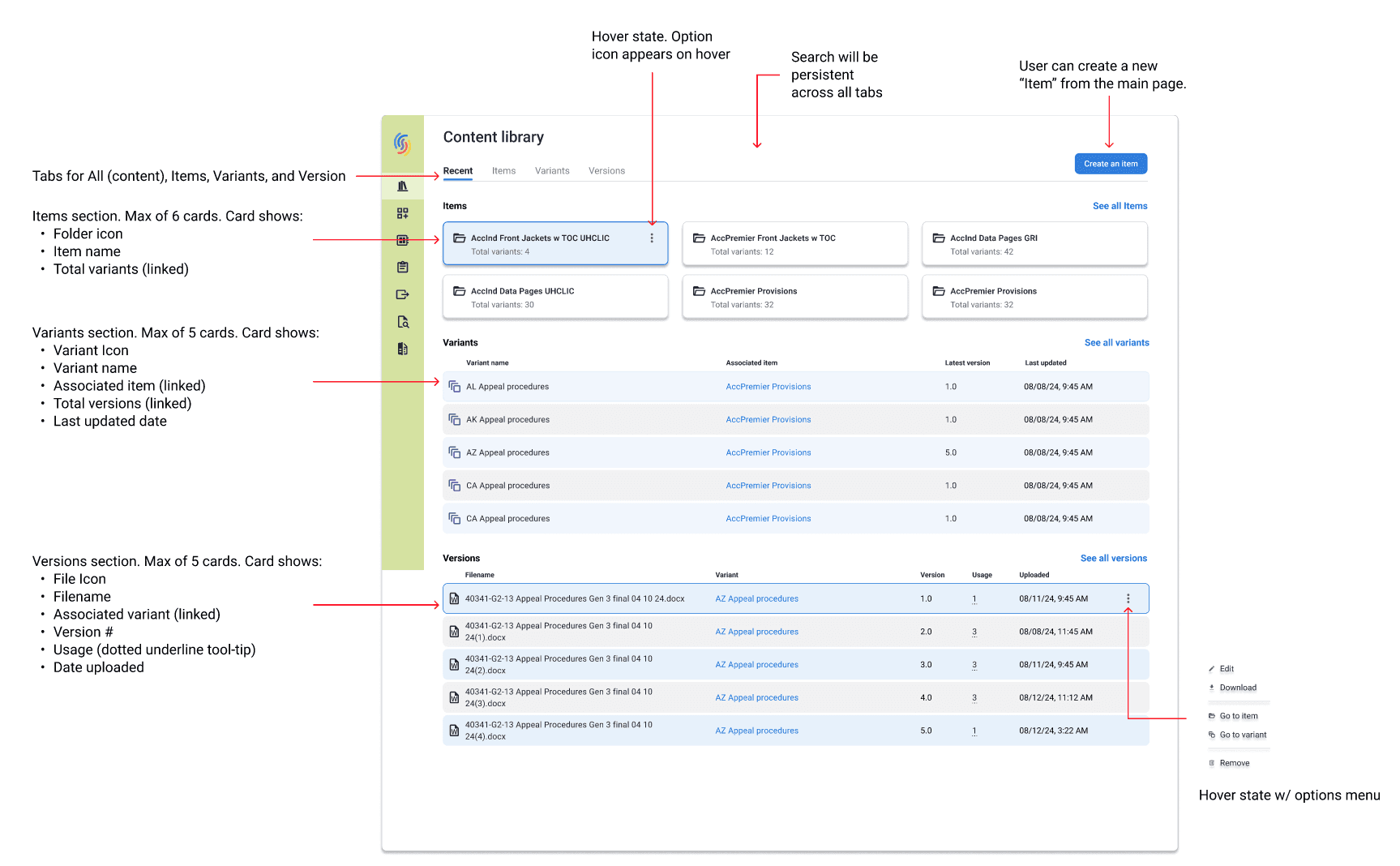
I redesigned the library around the Item, Variant, Version (IVV) model.
Item represents the core piece of content, such as a health insurance policy.
Variant represented a specific version of that content, such as a state specific policy.
Version tracked changes and updates over time.
This model gave customers a clear framework for understanding where content lived, how it was related, and how it evolved.
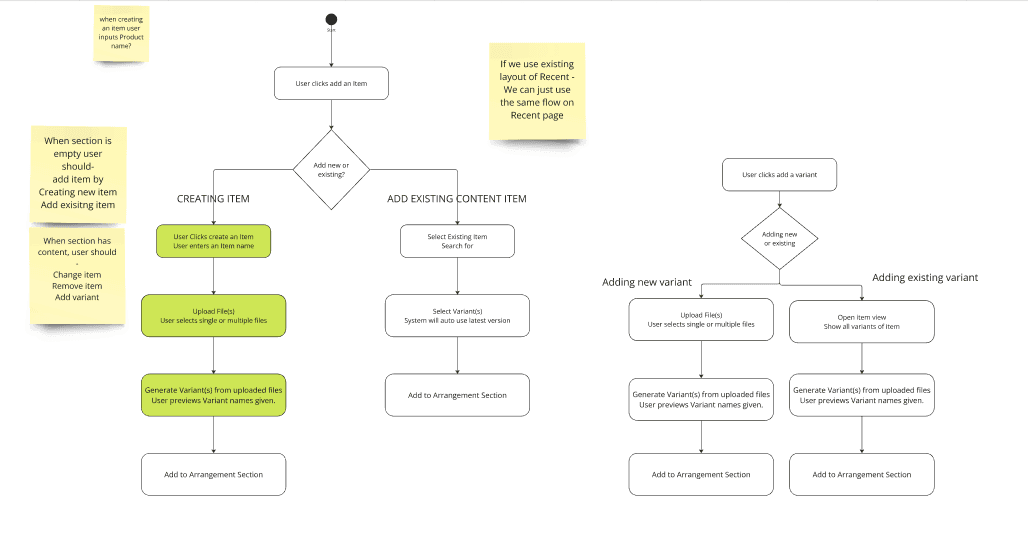
So instead of forcing people to learn the system, the system began to reflect the way they already worked.
Making Complexity Feel Manageable
With the IVV model in place, users could search by Item, Variant, or Version instead of digging through layers of folders and trees. Bulk uploading made it possible to manage large groups of documents at once. Navigation helped users move between related content without losing context.
Every improvement served the same purpose: helping people spend less time figuring out the system and more time getting work done.
Old landing page for Content Library:
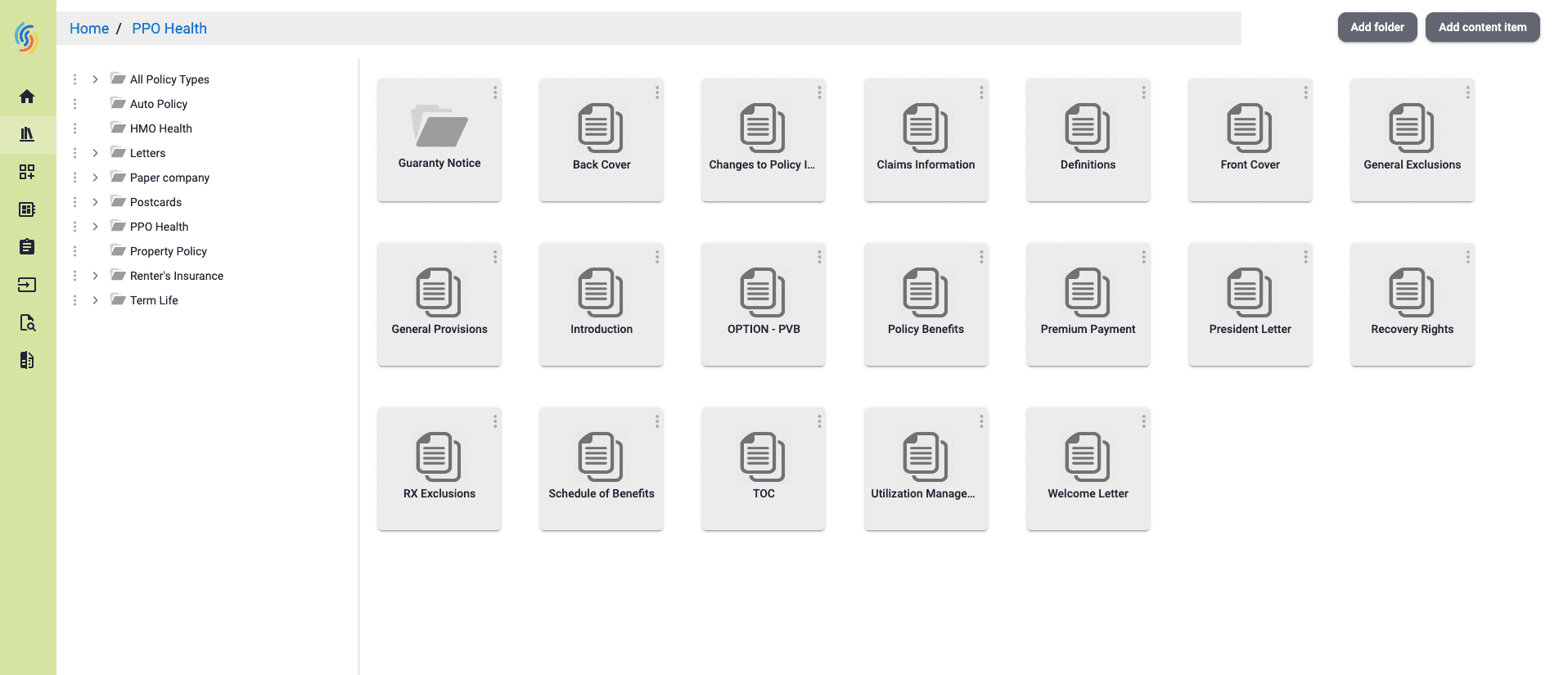
New redesign:
The Impact
The verdict came fast. Users called it a "game changer." Bulk upload gave them back about 30 minutes every session. Search killed the coworker-as-search-engine routine for good. And that thing nobody asked for? Now they could see exactly where any document lived before changing it, the quiet insight from watching, designed right in.
Next up: AI that tags and summarizes the changes between versions. But that's another story.